

Redemptor Hotel
Some things I've been thinking and writing about over the past year.

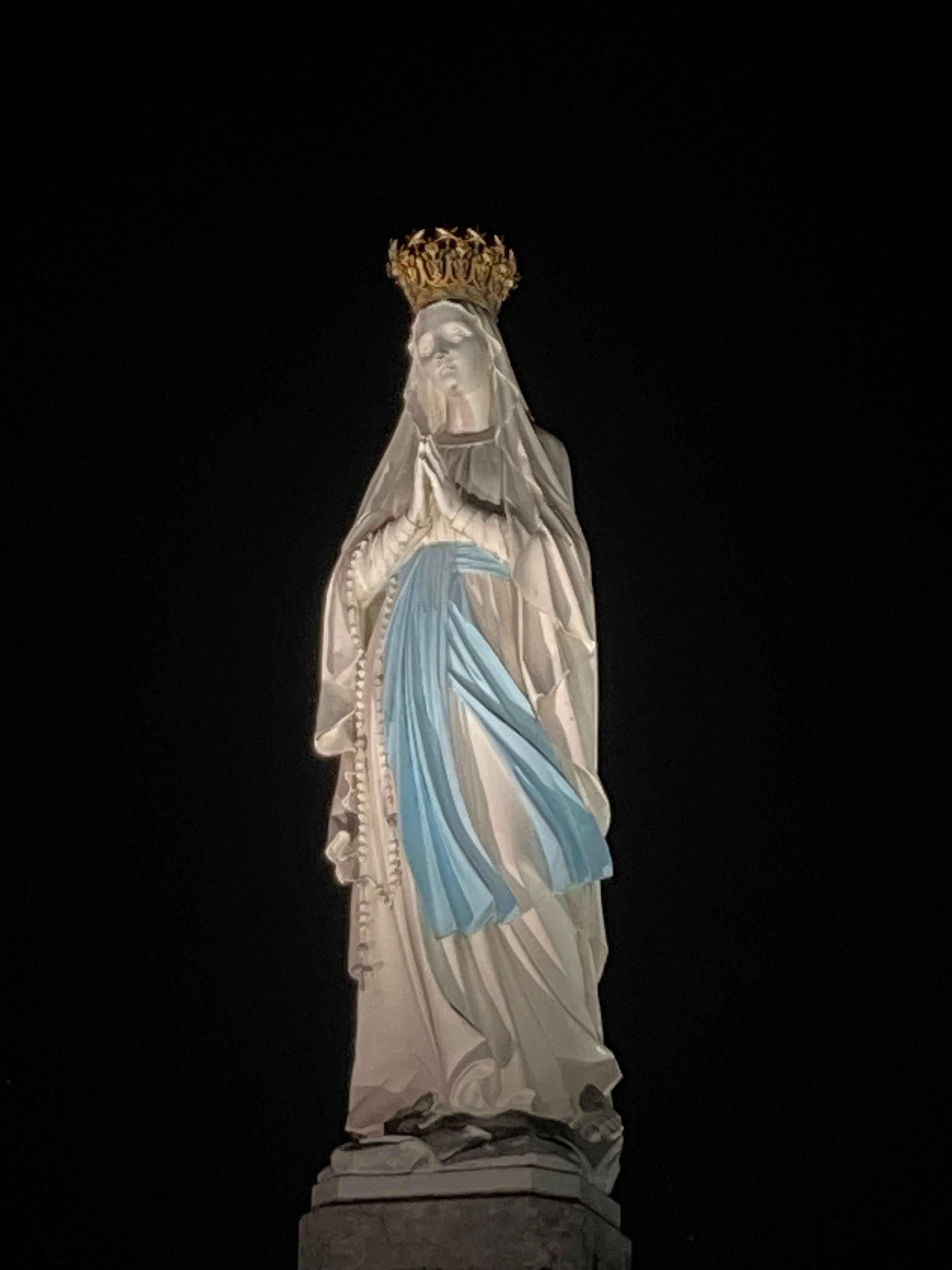
I begin at the grotto in the dark. White roses, tall candles, black river rushing over old stone. A statue of the virgin, apparition in the night. Cluster of priests in pale gold. Young woman on her knees in a white lace veil. I make the sign of the cross self-consciously, tracing a corpse across my face.
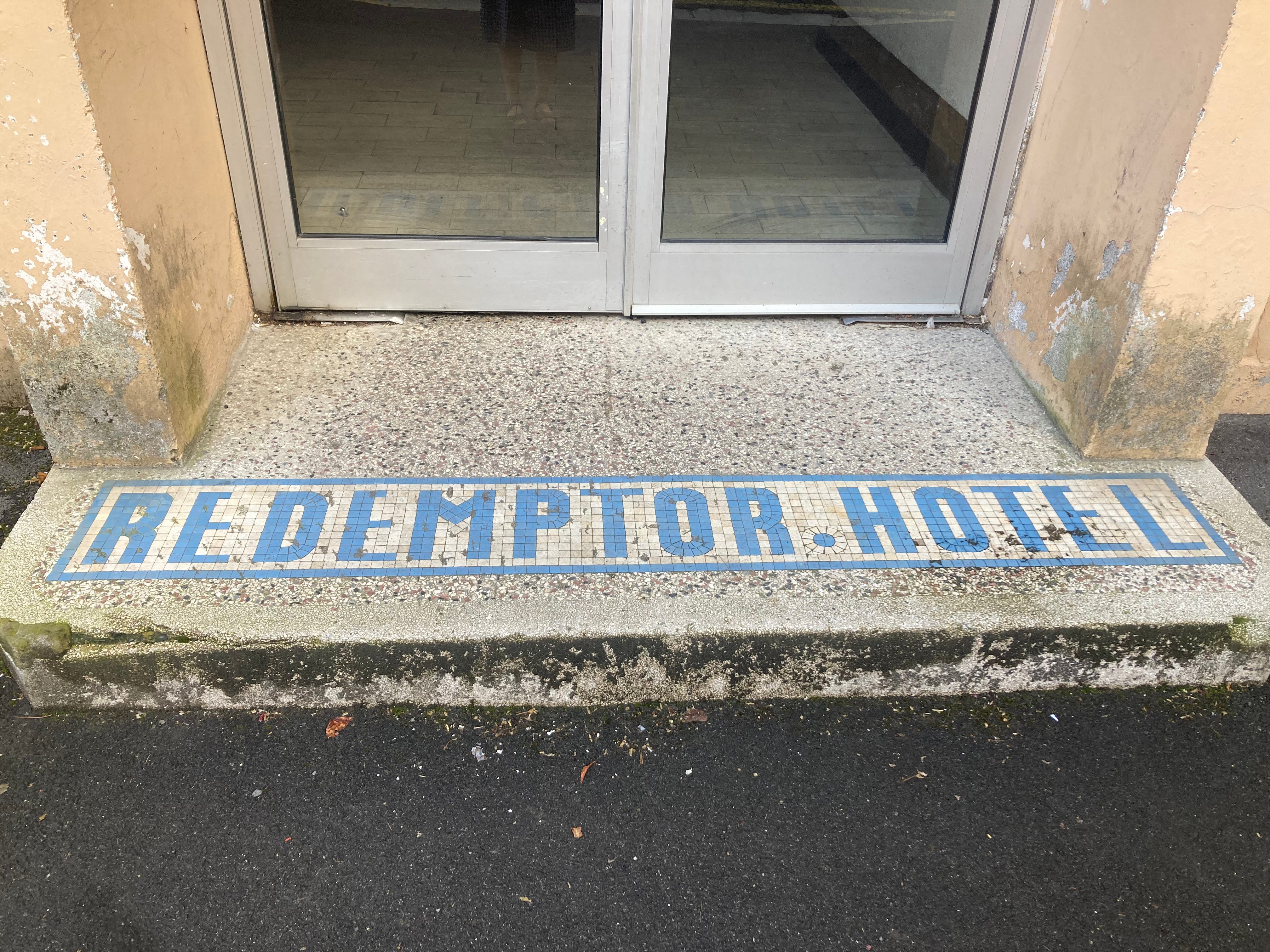
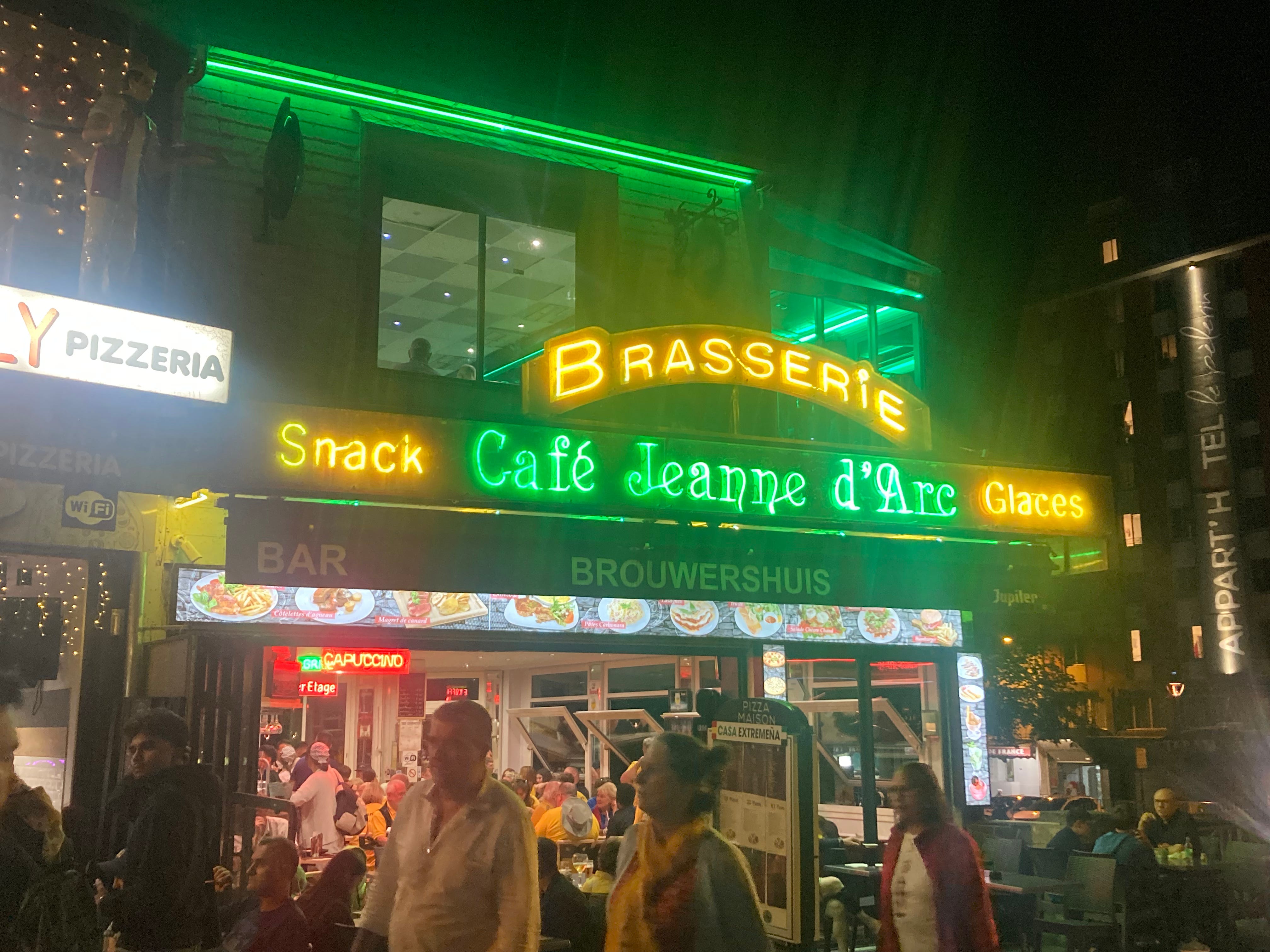
Afterwards, I cross the bridge, where a woman sings Ave Maria in gold sequins. I walk past Café Jeanne d’Arc, teenagers drinking beer at streetside tables, haloed in neon green. Climb a set of stone steps into a quiet, crumbling street. Glance over my shoulder, wary of being followed, even here. White and blue tiles in the doorway spell out Redemptor Hotel. I type the code into the keysafe and let myself in.
The studio smells damp beneath synthetic plug-in air fresheners; sickly summer berries. It brings back my twenties; all those dank rooms in houseshares trussed up in fairy lights and cheap scented candles, girlishness lacquered over rot. There is no shower curtain and I angle cold water at my body, unavoidably spraying the floor. The damp spreads. Once, this way of living appealed to me; ascetic, monkish, pure. I lie on the hard fold-out bed, looking for shapes in the mould on the ceiling, hoping for a face, a sign.
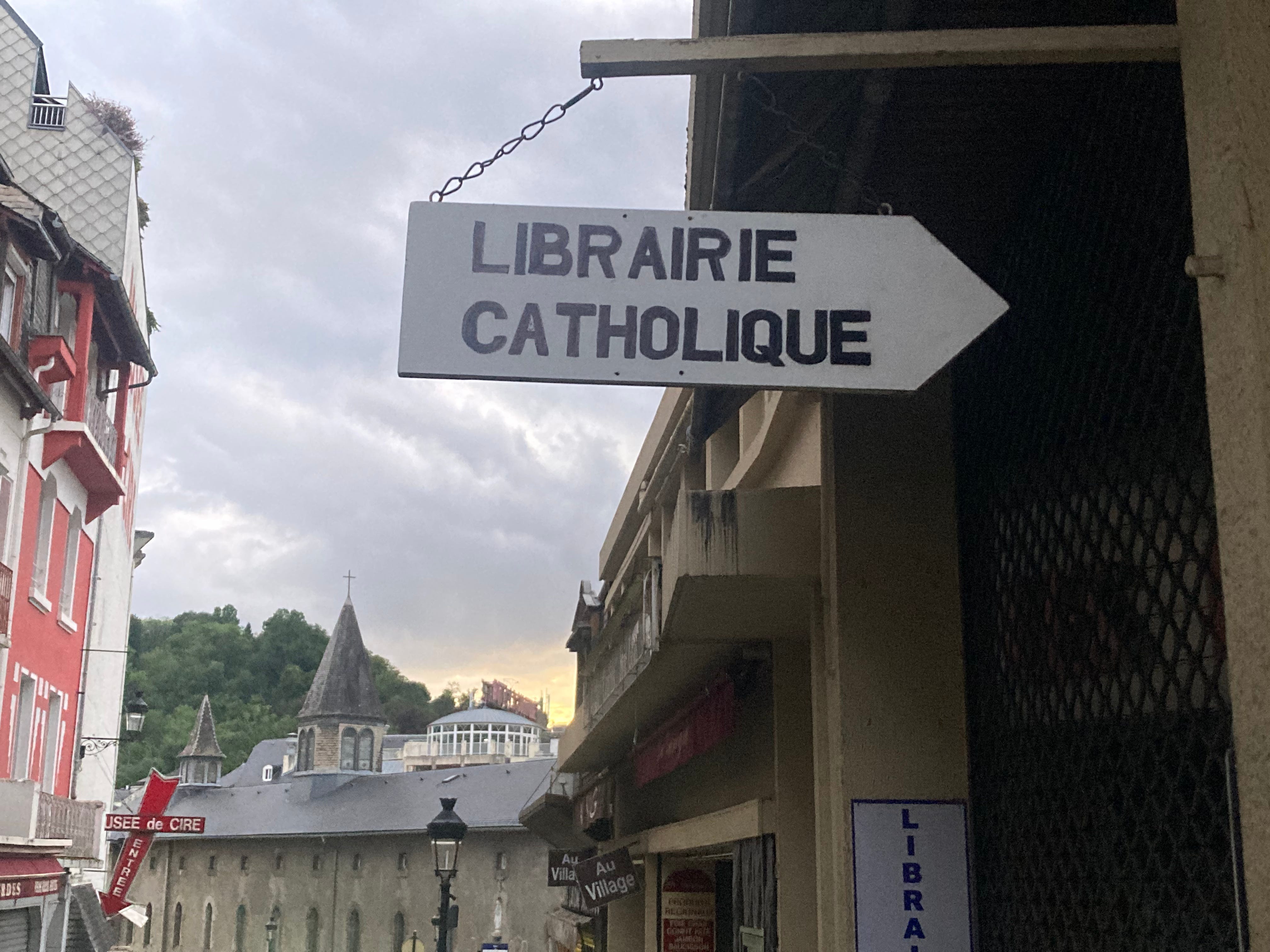
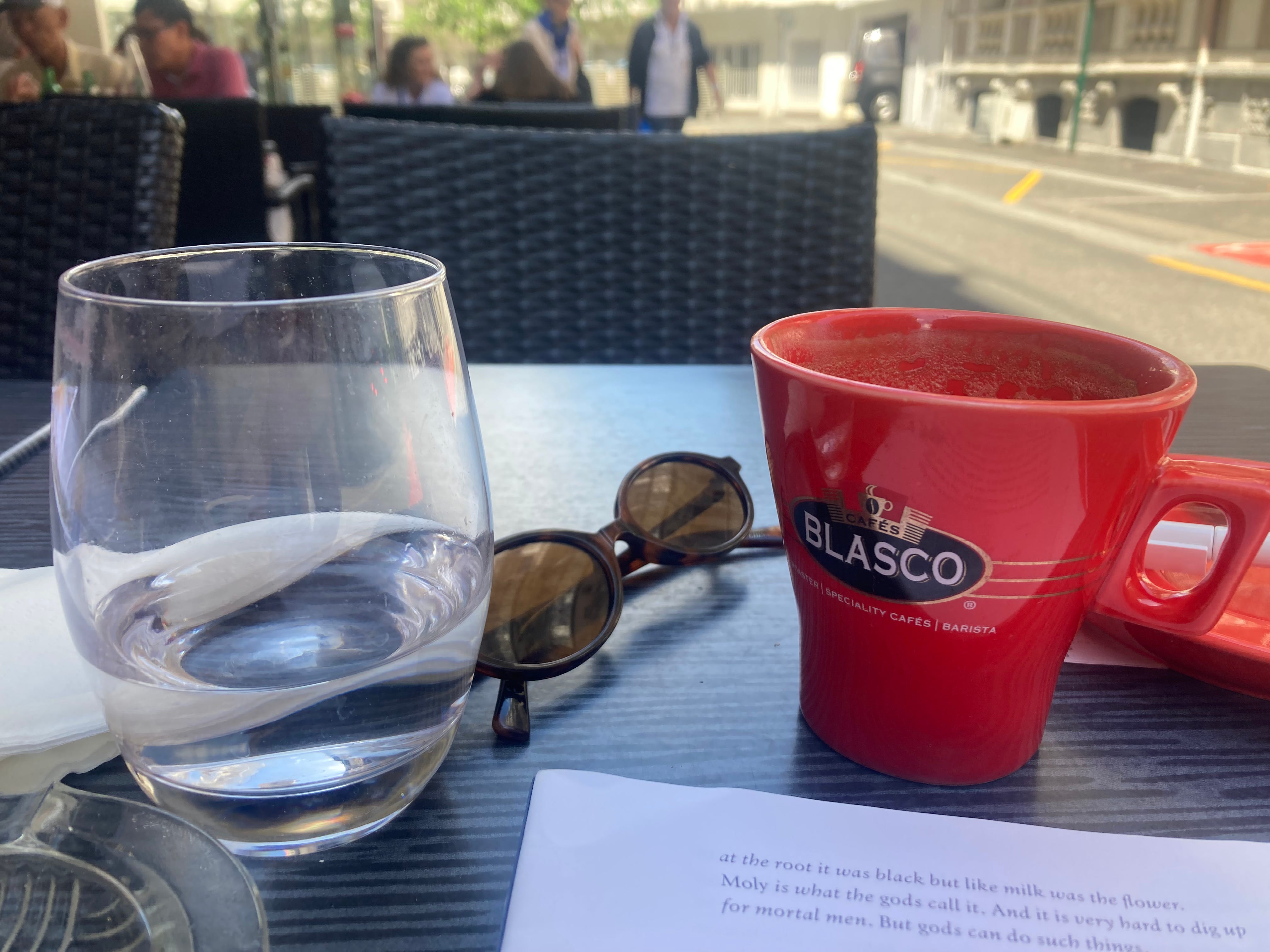
In the morning, I go out into the sunlight, past the librairie catholoique, gift shops selling glass bottles in jewel colours, kitsch t-shirts emblazoned with christ’s face. I sit at a café, order a coffee. Church bells ring and the waiter sings alleluia as he puts a red cup with a matching saucer down in front of me. I take out my notebook. I am here to do research, although I don’t know what exactly I am looking for. A couple of years ago, at Newcastle airport, when it was all still so raw, I noticed a queue of pilgrims wearing red neckerchiefs. I knew they must be coming here, and the memory of it made sick to my stomach. And so now I am here, trying to inhabit that feeling, thread it between my fingers, pearlescent and wet.
On my way here, the man next to me on the plane asked, what brings you to Lourdes? I told him it was a long story, and he said, sometimes people are called to spiritual places for reasons they do not understand. He had the voice of a priest, a voice I had forgotten. A calm, measured, soulful sound, recognisable in certain kinds of spiritual people. I wondered where they learn that voice; gentle, trustworthy. I wanted to pull it from his mouth, hook it out of his throat, hold it accountable. And I wanted to sink it to it, wrapped up in his syllables, loved, protected, safe. I came here when I was sixteen, I told him. He asked if I wanted to share a taxi into town, and I trusted him; that voice, this religion, even though I know about the violence, that’s partly why I am here. We got into the taxi and the man thoughtlessly started a sentence with, when you came here as a child and that word, child, has been ringing in my ears ever since.
I look up at the mountain peaks, breathing in pine air. A feeling of height, being closer to heaven. A shop window across the street is crammed with glow-in-the-dark virgins. When I was at school, a priest told me that Mary never committed a sin in her life, which meant that her mother never had sex, and neither did she, but babies grew in their wombs anyway, without their choice, the good news delivered by angels. When we were told this at school, a girl in my class, who already knew about violence, asked, was Mary raped by a solider? The teachers exchanged glances and the girl was taken outside, to speak to the priest in private.
When I was sixteen, there was another girl at my school who was pretty and wild. She got pregnant without angels. Her family were well-respected in the catholic community and she kept the baby. We all knew that pregnancy was one of the worst things that could ever happen to us, because abortion was one of the most terrible things we could ever do. We would have to confess it to a priest at the altar. We would live in regret forever. Sex was wrought in fear, because it would lead to a baby, which meant giving up our lives, or giving up our deaths, obscuring freedom and pleasure. I felt afraid for the wild, pretty girl, and I also felt smug. She had been punished for her wildness and prettiness, perhaps by god, or maybe by all of us, the people around her, who could not stand her freedom. I could not see then, because I was a child, that her punishment was mine too.
I run my fingers over rows of virgins, tacky with sunlight and glitter. I want one, despite myself. I want someone to watch over me (who watched over those girls?), to keep me safe (who kept them safe?), to protect me from my own desire.
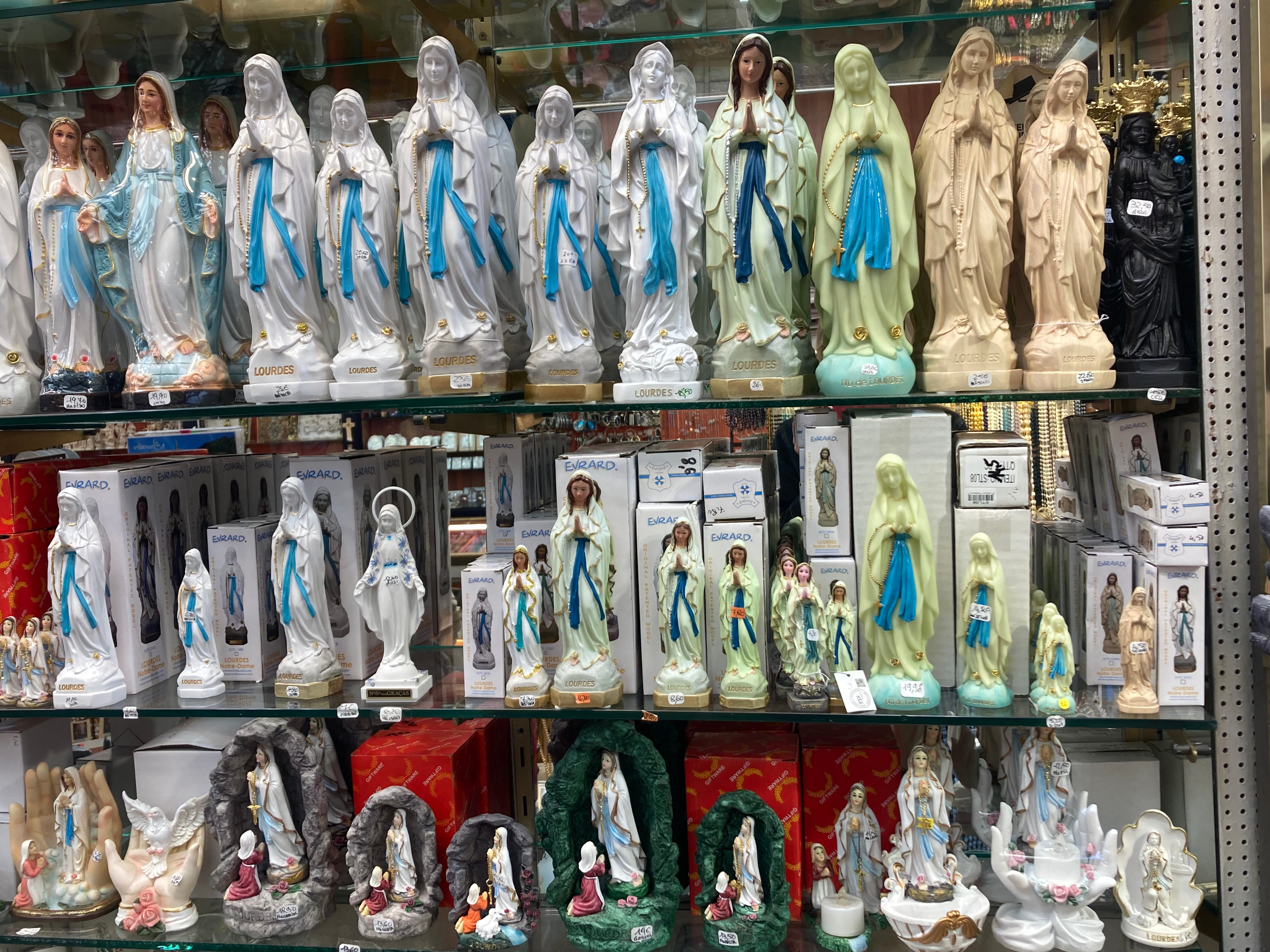
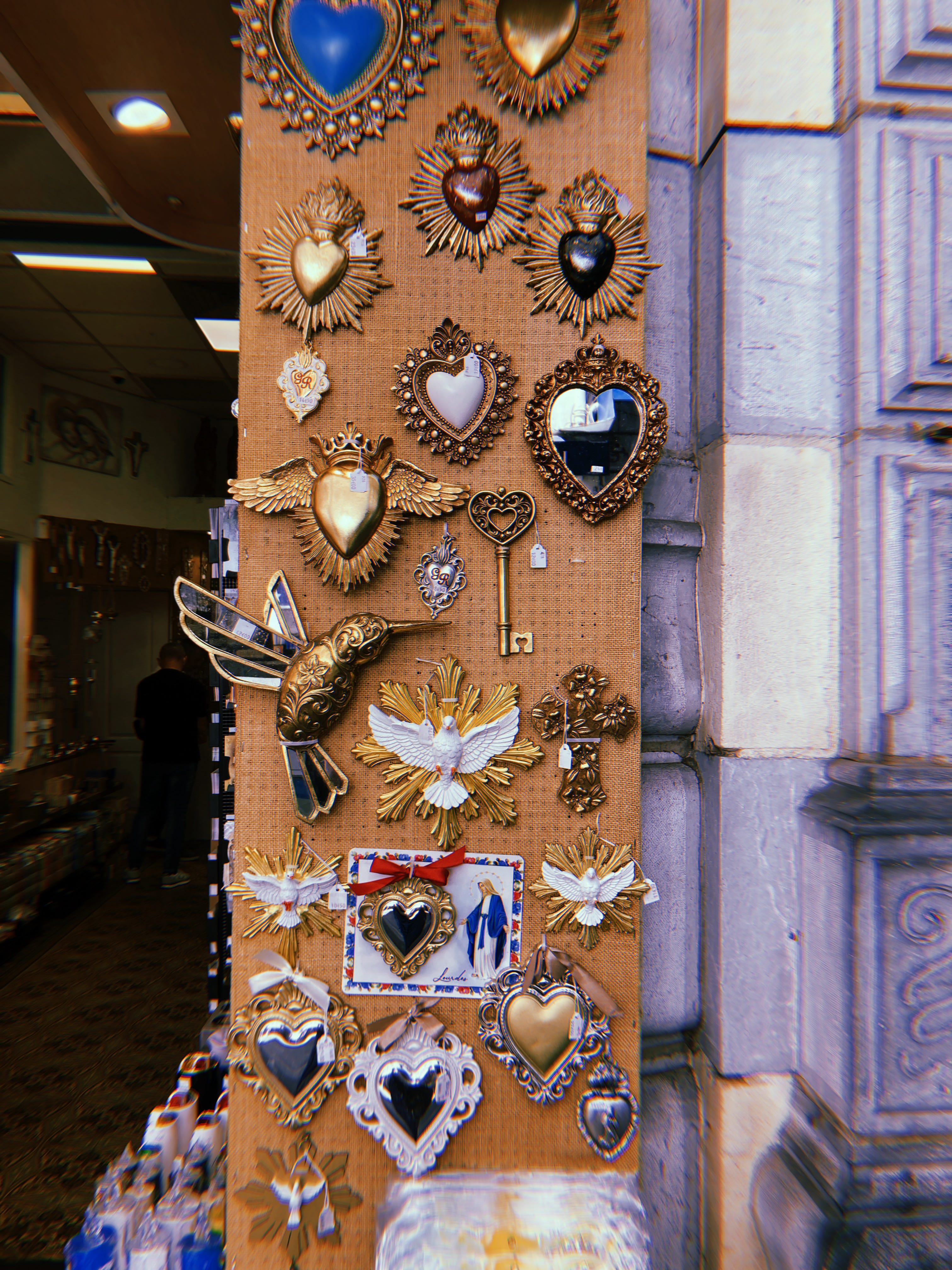
I walk through the morning streets past Hôtel Teresa. A priest dressed in black with a pair of square Ray-Bans rushes by. I pass Hôtel Paradiso, shops crammed with pink pearl rosary beads, silver medallions in the shapes of saints’ faces, flaming hearts, a wall of bleeding mirrors. Hôtel Christ Roi. I trace a figurine of Jesus with his palms outstretched, gold light spilling from his fingers. There are angels with feathered wings, saints wearing crowns of roses. Nuns in white dresses and tights with bright blue neckerchiefs walk along the street in pairs. Lungfuls of sky. Franciscan monks in long brown robes, wooden beads clutched in their fists.
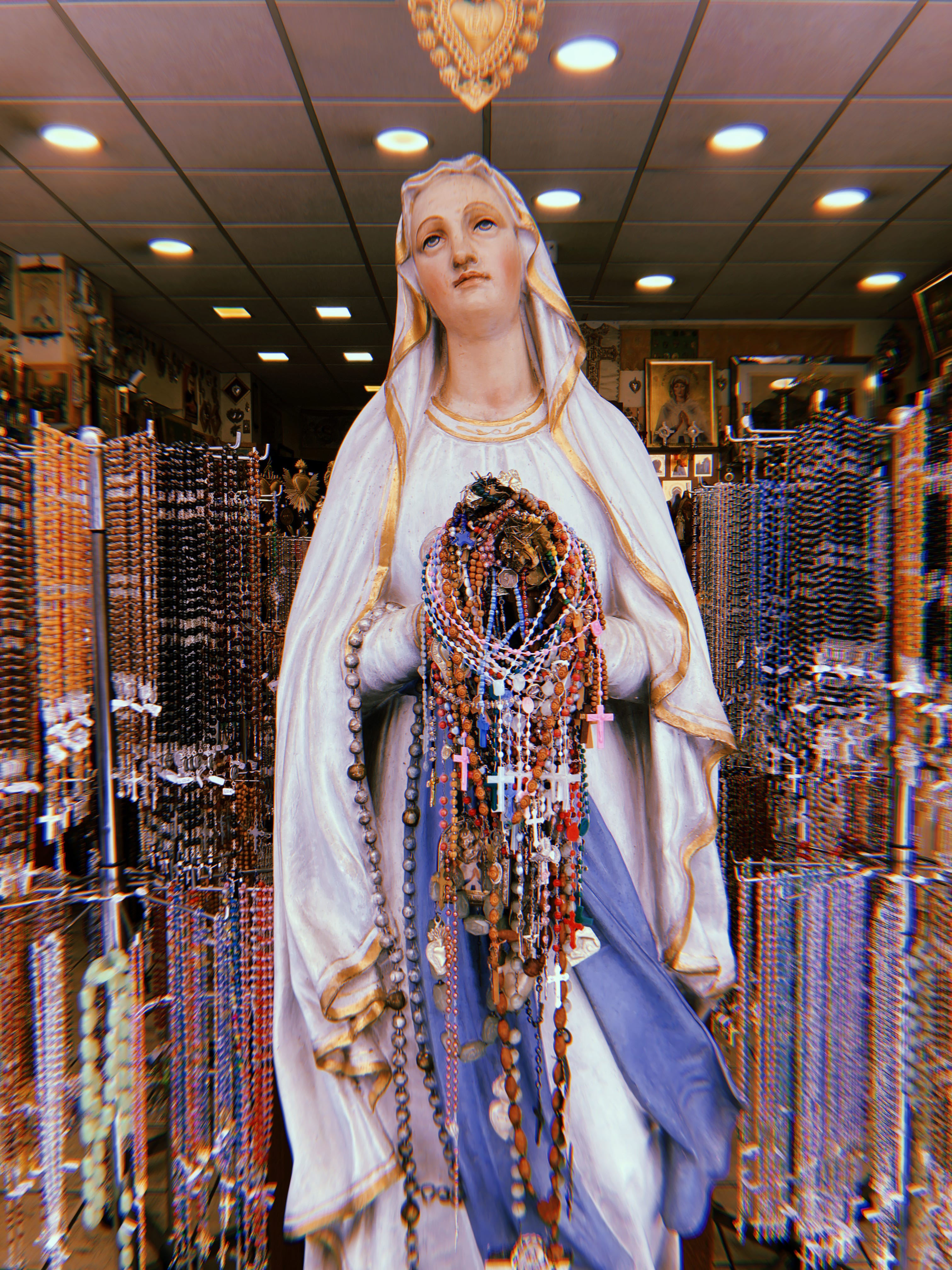
Volunteers pull pilgrims in three-wheel carts along Rue de la Grotte. There are so many bodies in pain. Jesus bleeding on the cross, garnets dripping down his face. People in wheelchairs beneath the thudding sun, praying to walk again, to see, to speak, to live without pain; everything the bible promises.
When I was truly a child, my mother brought my little brother here. He was born deaf, and she prayed for him to be able to hear. This kind of prayer is ethically complex, but my mother was young and desperate and she believed in god. She had been given a caring role, without her choice, delivered by angels. My brother is still deaf, but he had a hole in his heart then, which closed of its own accord. When my mother recalls this now, she says, I was praying for the wrong thing.
When I came here at sixteen (when I was a child), I was in love with a boy on the pilgrimage. We sneaked off on our own (pretty, wild) to get drunk in a bar in a thunderstorm. We sat on the terrace, watching lightning flash. We kissed in our plastic chairs, wooden doves around our necks, wrists cuffed in plastic beads emblazoned with Padre Pio, the patron saint of adolescents. I felt the world rush through me as we got soaked by the rain. I was desperate to lose what I perceived to be my virginity that summer. I remember thinking the line, ‘it followed me around like a stink’ and being pleased by it, even then. The definition of sex is important here. It will come to be important later.
Later, we went to the grotto in the dark. I was still half-drunk in my cut-off denim mini-skirt. There were hundreds of candles burning in the night, so many fragile prayers. I thought of my brother with his white-blonde curls, cradled in my mother’s arms, the glow of his tiny heart. I felt all of those hurting, hopeful, desperate people around me, and I cried so hard that a priest, that priest, said, that’s enough, now. But it wasn’t enough, not really. I want to cry harder now, with that girl by the river, for the damage that was done to the people around her. We were just children, sisters, virgins, pretty, wild, smug, drunk on lager and the promise of a miracle, wet with rain and waiting to be punished.
Here at thirty-three, the same age my mother was when she brought my brother, I go into the basilica and stand in front of Bernadette’s ribs, protected by a gold gilded cage. I want to put my hands inside her ribcage, to feel something move through me (I want all of this to be real). A nun (a sister) glances at my bare shoulders and anywhere else in the world I might cover them respectfully, but not here, in my own religion (can I lay claim to it?) my own culture (can I really say that?) my own hurt (am I wrongfully taking someone else’s pain, elongating it, drawing it out?) my own shame (which at least belongs to me). When I came here at sixteen (a child), I wore shorts in the hospital; fake-tanned legs, thick calves like a puppy, diocese polo shirt knotted at the waist, exposing my belly button gem. I wasn’t yet starving myself into purity and light, but the desire was already there. A nun (a sister) looked me up and down and said, you look like you’re on your holidays. We weren’t given any training in the hospital. We were left alone to care for people who needed a lot of support. I took a woman to the toilet, supporting her heavy weight, wiping for her, taking her back to bed. I had not travelled to many places and the south of France was magical, sun-split and unreal. I was a child on my holidays, pilgrim, virgin, sister, saint.
There is holy water in abundance, dripping from taps, spilling over hands, arms, feet in sandals, poured over children’s heads. I take a pew in the heat by the baths and wait for hours as a priest recites the rosary in Italian, followed by a Notre Pio, over and over again. I imagine my mother and brother sitting here, all those years ago. My brother’s crooked front teeth, the hearing aids that did not work. My mother on her knees in the grotto, dark bob around her face, asking god to make her son hear. She was given god by my grandad, (the nuns used to hit her at school), who was given god in Ireland (the priests and nuns abused him in a children’s home), where god was in the earth, trees and water (and in the souls of people who were starved to death by the British, shot, bombed, burned alive by the British, and also the IRA), where god could be felt. I want to reach through the years and touch them, hold them close.
Eventually, it is my turn. I am led behind a green and white striped curtain into the baths. Full immersion is no longer offered, in the wake of the coronavirus pandemic. Instead, two women wash my hands and face in holy water and give me some to drink. They ask me to say a Hail Mary and I panic, unable to remember the words. I feel fraudulent, touching the water, when I don’t quite believe in it (do I?) when I don’t need it (don’t I?) not in the way that other people here do (do they?). And still, I fill an empty water bottle to give to people at home, to heal them, protect them, keep them safe (from what?).
When I was here at sixteen (when I was a child), the pilgrims and volunteers from my diocese, including the girl who became pregnant shortly afterwards, stayed in a hotel together. We girls dressed the boys up in our clothes, doing their eyeshadow and lipgloss carefully, loaning them our bras and shoes. They wore the little dresses and high heels that we had brought to the pilgrimage with their glow-in-the-dark rosary beads. We had a party in our room, dancing on the beds and drinking beer from glass bottles. The priest came in, yes, that priest, and laughed at the teenage boys virgins, saints dressed in our clothes, the same teenage boys he was abusing. He looked in the wardrobes and under the beds to find the friends who were hiding there. We loved him, we made him laugh, we offered him a bottle of beer and he drank it. Now, girls, he said firmly, in his soft, dangerous voice. That’s enough.
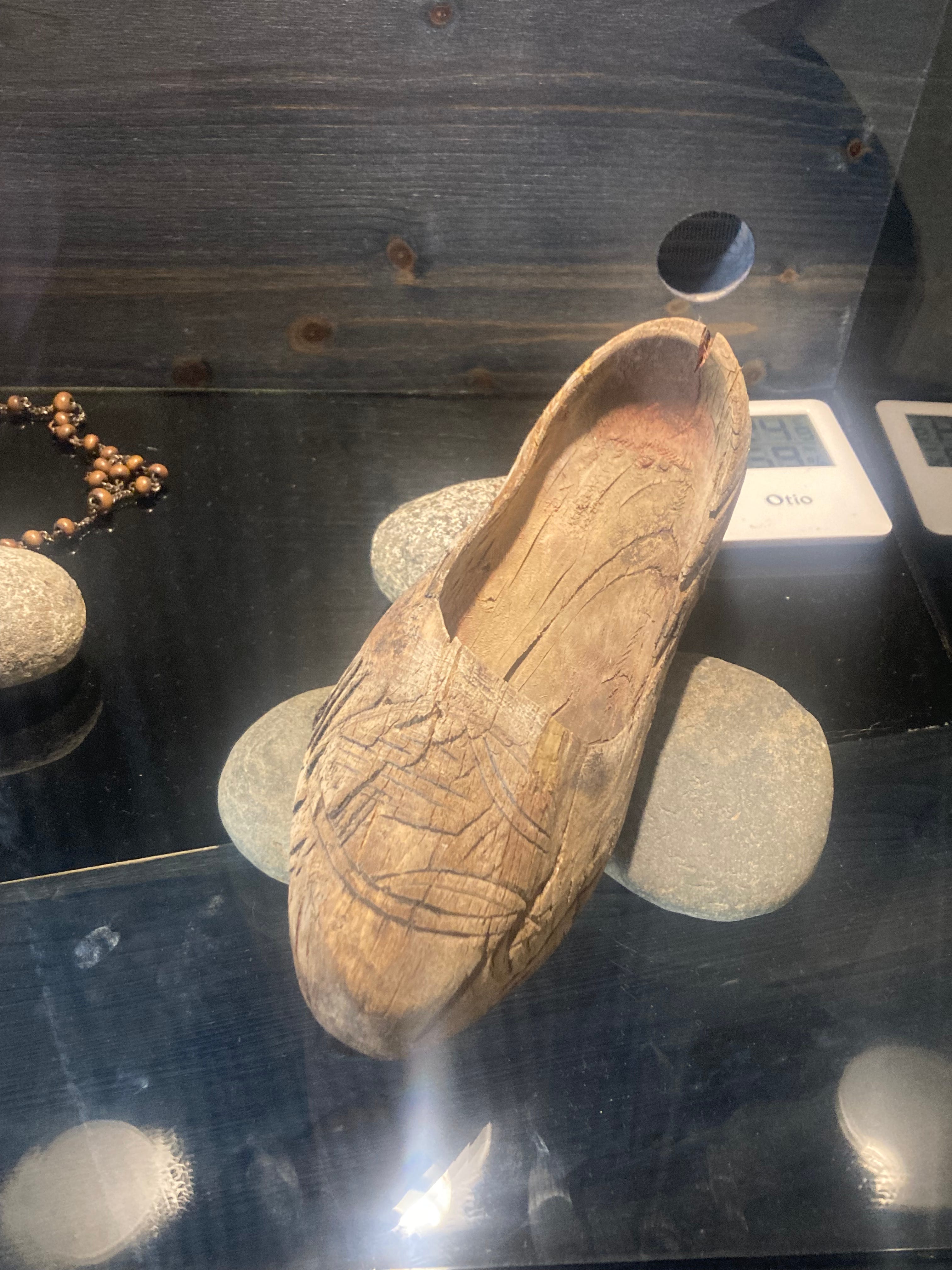
I go to Bernadette’s house, which is now a museum, crowded with pilgrims, or maybe tourists, it is difficult to tell. Her wooden clog is in a temperature-controlled case, under a spotlight. I press my face against the glass, reassured by the solid shape of it. There was a girl called Bernadette, and this is her shoe, which stood on the rocks on the riverbank, witnessing something. That part is true.
In a monastery, I read about a nun whose body smelled of fresh lilies after her death, the odour of sanctity. The veins on her forehead spelled out the name of Jesus. There was a nun who only ever ate holy communion and a nun who prayed so hard that the carpet beneath her was scorched with flame from the force of her breath. I understand why these women were pulled to make their lives small and predictable, to feel they were part of something larger than themselves. To avoid marrying men and mothering children, to reduce the potential for danger, to be looked after by the church. (But what about the angels? What about the rush of the world in the thunderstorm, how it felt to be soaked by the rain? What about the boys in our high heels and the priest with his soft and dangerous voice? What about new year’s eve, when we got drunk in his house and danced through the church in our sequinned dresses? Who was looking after us then? Were we praying for the wrong thing?)
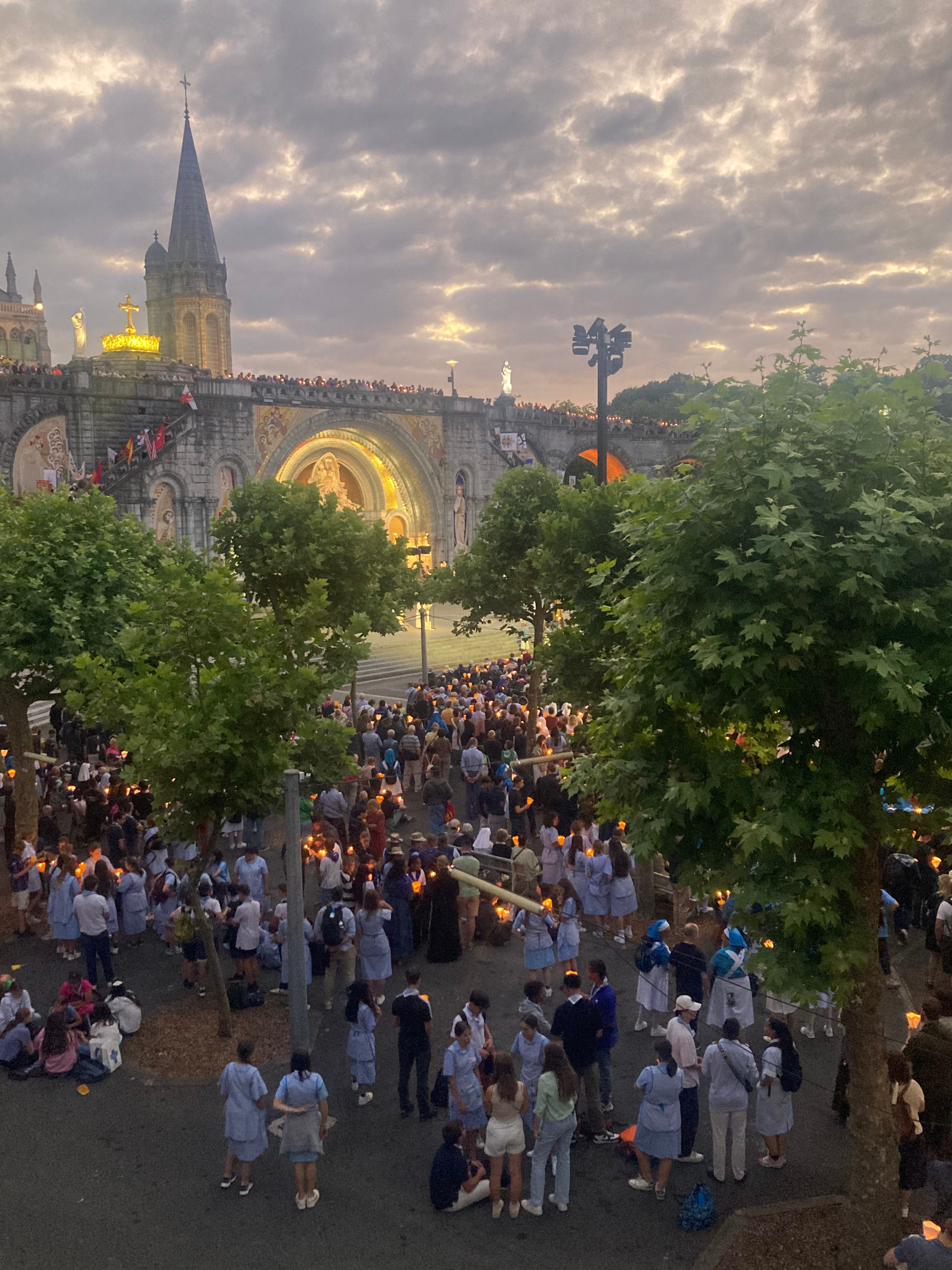
I take part in a candlelit procession, joining a swell of people singing Ave Maria, holding a candle in front of me. I see the woman from the bridge in the gold sequins. She is alone, holding a tall light, looking lost. There is something in her that I recognise and prefer to keep at a distance. I move away from her intensity, afraid I might breathe it in. It is impossible not to be moved by the flaming sky behind the basilica, people pushing wheelchairs, prams, hospital carts, thousands of lights cupped in palms beneath the trees. My chest expands, even as I notice the tired women with five or six children, their prim dresses, the priests in their collars speaking into microphones. They tell us about the mother of god, how she was perfect, pure, while humanity is in the dirt. Guilty thoughts grow behind my eyes. Yes, I could be a better person, yes, I have sinned, yes, I want to be pure, absolved, empty, filled with light. There is a lot to value here, in the hope it offers people, the visibility of sick and disabled bodies, the gentleness and care. But there are also the priests in their collars, laughing at the teenage boys, my friends, we were sixteen, on our holidays, blood on their lips and bodies on their tongues.
I join a mass in the grotto with the Diocese of Leeds. There is a group of teenagers in polo shirts and neckerchiefs. I recognise the girls with their highlights and mascara, the boys with gel in their hair. I watch them, awkward in their bodies, shielding their eyes from the sun. Here to care for pilgrims, to get drunk on holiday, to witness a miracle, lose their virginities, to be absolved from sin. I want to run over to them, disrupt the mass, tear down the candles, ask if they are okay. But this place gives people as much as it takes away. They push past me in their rush for communion. I join the queue, take a host and let it melt on my tongue, the way I was taught as a child.
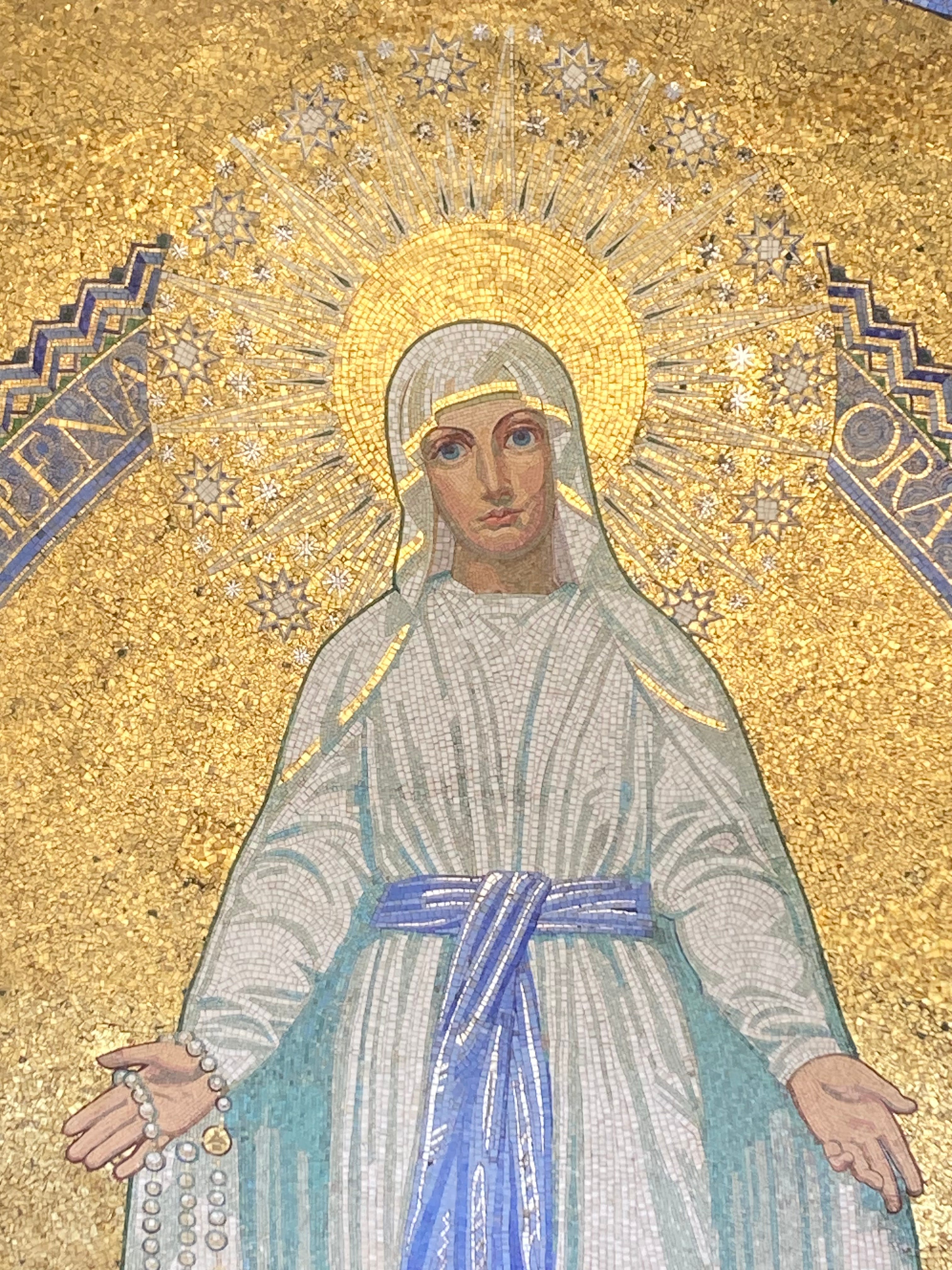
On my way back to the Redemptor Hotel, I turn a corner, and there, in the street, are two apparitions in white, a crowd gathered round them. For a second, the air around me flickers, and I feel the rush of the thunderstorm, my long lost virginity, the hole in my brother’s heart.
I stay for a while, watching other people turn into the street and witness the vision. I see the light in their faces, hot seconds of wonder, vulnerability, faith. They are angels, redemptors, come to save us, punish us, to give me a baby against my will. They are saints, signs, gods, girls, glow-in-the-dark virgins, mothers cradling their children, teenage boys in dresses. We lunge forwards, hungry, reaching for their wings, but our hands are empty and there is nothing there.
Wonderful! Thank you for sharing. 'What I perceived to be my virginity' is such an important phrase, I think xx